
Buckle up, gamers! The world of Racing Game Esports is exploding, transforming virtual tracks into high-stakes battlegrounds. From humble beginnings, it’s now a multi-million dollar industry, attracting millions of players and fans worldwide. This isn’t just about pushing pixels; it’s about precision, strategy, and the thrill of virtual victory. We’ll explore the evolution of this electrifying sport, delve into the key players, and uncover the secrets behind its meteoric rise.
We’ll cover everything from the top racing titles and their massive player bases to the innovative technology driving the experience, the lucrative sponsorship deals, and the passionate communities that fuel this exhilarating sport. Get ready for a deep dive into the fast-paced world of competitive virtual racing!
The Technology Behind Racing Game Esports
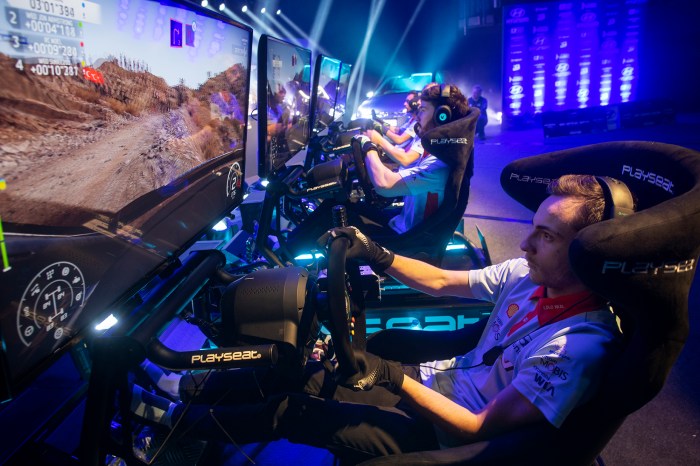
The explosive growth of racing game esports hinges on remarkable technological advancements. From increasingly realistic simulations to sophisticated hardware and software, the entire experience has been revolutionized, demanding higher skill ceilings and pushing the boundaries of competitive gaming. This section delves into the technological underpinnings of this exciting field.
Simulation Technology in Racing Game Esports
Simulation technology is the backbone of realistic racing game esports environments. Modern racing simulators go far beyond simple graphical representations. They incorporate complex physics engines that accurately model tire grip, aerodynamics, vehicle weight transfer, and suspension dynamics. These simulations are often based on real-world data, meticulously gathered from professional racing teams and manufacturers. This level of fidelity allows for incredibly nuanced gameplay, rewarding precise driving techniques and strategic decision-making.
For example, the subtle differences in downforce between two car setups, or the impact of track temperature on tire wear, become crucial elements in competitive racing. The constant evolution of these physics engines means that the skillset required to excel is constantly evolving, demanding adaptation and innovation from the players.
Hardware and Software Requirements for Racing Game Esports
Participating in professional racing game esports requires a significant investment in both hardware and software. High-end hardware is crucial for achieving optimal frame rates and low latency, which are essential for competitive play. This typically involves a powerful CPU and GPU, ample RAM, and a high-refresh-rate monitor with low response times. The use of dedicated racing wheels and pedals, often featuring force feedback technology, provides a far more immersive and realistic driving experience compared to standard controllers.
This allows for finer control and a deeper understanding of car behavior. On the software side, the racing simulator itself is paramount, alongside other tools for data analysis and telemetry. These allow drivers to review their performance, identify areas for improvement, and optimize their setups.
Comparison of Racing Simulators Used in Professional Esports
The choice of racing simulator significantly impacts the esports landscape. Different simulators offer unique characteristics in terms of physics, car handling, and track variety. Below is a comparison of some popular options:
| Simulator | Strengths | Weaknesses | Popular Esports Series |
|---|---|---|---|
| iRacing | Highly realistic physics, large and diverse track selection, strong community | Steeper learning curve, higher cost of entry | iRacing World Championship Series |
| Assetto Corsa Competizione | Focus on GT3 racing, detailed car models, excellent graphics | Smaller track selection compared to iRacing | GT World Challenge Esports America |
| rFactor 2 | Highly customizable, extensive modding community, wide range of cars and tracks | Can be challenging to set up and configure | Various online and offline championships |
| Automobilista 2 | Realistic physics, strong focus on South American tracks, good value for money | Smaller esports presence compared to other simulators | Smaller, regional championships |
The Fan Base and Community of Racing Game Esports
The global appeal of racing game esports is undeniable, drawing a diverse and passionate fanbase from across the world. This community is fueled by the thrill of competition, the mastery of virtual driving, and a shared love for the meticulously crafted digital worlds and vehicles these games offer. Understanding the demographics and engagement methods of this fanbase is crucial for the continued growth and success of the racing game esports scene.
The racing game esports fanbase is surprisingly broad, defying easy categorization. While a significant portion consists of young men aged 18-35, a growing number of women and older gamers are actively participating as viewers and competitors. Geographical distribution is also diverse, with strong followings in regions with established gaming cultures like North America, Europe, and East Asia, but also rapidly expanding interest in Latin America, South Asia, and parts of Africa.
Many fans are also deeply involved in sim racing communities outside of organized esports, blurring the lines between casual and competitive participation. This shared passion creates a unique and vibrant ecosystem.
Demographics and Characteristics of the Racing Game Esports Fanbase
The racing game esports audience isn’t monolithic. While a significant portion aligns with the stereotype of the young male gamer, a considerable and growing segment comprises women, older gamers, and individuals from diverse socioeconomic backgrounds. Many fans are highly technically proficient, possessing advanced knowledge of car setups, racing lines, and game mechanics. This technical expertise often translates into active participation in online forums and communities dedicated to sharing strategies and tips.
The shared interest in meticulous car tuning and strategic racing creates a strong sense of community. This dedication extends beyond just watching events; many fans actively participate in sim racing leagues and communities, fostering a strong connection to the broader racing ecosystem.
Fan Engagement with Racing Game Esports Events and Communities
Fans engage with racing game esports through various channels. Live event attendance, both online and in-person, remains a significant driver of engagement. The atmosphere of live events, with the roar of the crowd and the intensity of the competition, creates an unforgettable experience. However, online engagement is equally important. Live streaming platforms like Twitch and YouTube provide readily accessible content, allowing fans worldwide to watch races and interact with other viewers in real-time.
Online forums and social media platforms serve as crucial hubs for discussion, strategy sharing, and community building. Many fans participate in fan-made leagues and competitions, extending the excitement beyond official esports events.
The Impact of Streaming Platforms on the Growth of the Racing Game Esports Fanbase
Streaming platforms have been instrumental in expanding the reach of racing game esports. The accessibility of live streams, highlights, and VODs (Video on Demand) allows fans worldwide to access content regardless of geographical location or time zone. Popular streamers often cultivate dedicated communities around their channels, further driving engagement and interest in the sport. The interactive nature of streaming, with chat features allowing viewers to engage with streamers and other viewers in real-time, has fostered a sense of community and belonging, attracting and retaining viewers.
This has led to significant growth in viewership and overall fanbase size. For example, the popularity of iRacing broadcasts on Twitch showcases the potential for niche racing titles to reach broad audiences through streaming.
Examples of Successful Community-Driven Initiatives within the Racing Game Esports Community
The racing game esports community is known for its innovative and collaborative spirit. Many successful community-driven initiatives exist, enriching the overall experience. One notable example is the creation and maintenance of extensive online databases and wikis dedicated to car setups, racing strategies, and track guides. These resources are invaluable to both aspiring and experienced racers, fostering a collaborative learning environment.
Furthermore, numerous fan-organized leagues and tournaments offer competitive opportunities outside the official esports calendar, providing a platform for racers of all skill levels to test their abilities and engage with the community. These community-driven events often demonstrate a strong sense of sportsmanship and camaraderie, strengthening the bonds within the racing game esports ecosystem. The collective knowledge and shared passion within these communities continually enrich the overall experience for both participants and spectators.
The Business Model of Racing Game Esports
Racing game esports, like any professional sport, requires a robust and multifaceted business model to ensure its sustainability and growth. Revenue streams are diverse, ranging from traditional sponsorship deals to the increasingly lucrative world of broadcasting rights and merchandise sales. Understanding these various income sources is crucial to appreciating the financial landscape of this exciting sector.
Revenue Streams in Racing Game Esports
The financial success of a racing game esports organization hinges on several key revenue streams. These streams are interconnected and often mutually reinforcing, creating a complex yet potentially highly profitable ecosystem. A successful organization strategically leverages each to maximize its income.
- Sponsorships: Major brands often sponsor teams and events, providing significant financial backing in exchange for brand visibility. This can include logo placement on cars, driver uniforms, and in-game advertising. For example, a popular energy drink company might sponsor a leading team, gaining exposure to a highly engaged and passionate audience.
- Broadcasting Rights: Streaming platforms like Twitch and YouTube, and traditional broadcasters, pay significant fees to secure exclusive rights to broadcast races and tournaments. The popularity of the game and the viewership numbers directly influence the value of these rights. The higher the viewership, the more lucrative the broadcasting deals become. Think of the revenue generated by the broadcast rights of major Formula 1 races – a similar principle applies to racing game esports.
- Merchandise Sales: Teams and leagues often sell branded merchandise such as clothing, hats, and accessories. This generates a consistent revenue stream and fosters fan loyalty. A successful team might offer limited-edition merchandise tied to specific events or driver achievements, increasing the desirability and value of the products.
- Prize Money and Tournament Fees: Tournament entry fees and prize pools funded by sponsors and organizers provide another substantial revenue source for both the organizers and participating teams. The size of the prize pool can significantly influence the level of competition and the overall prestige of the tournament. High prize pools attract top talent, leading to higher viewership and, consequently, more lucrative sponsorship and broadcasting deals.
- In-Game Advertising and Virtual Branding: Virtual branding opportunities within the game itself are a growing revenue stream. Sponsors can place their logos on virtual cars, tracks, or even within the game’s environment. This immersive advertising can be highly effective, offering targeted exposure to a dedicated audience.
The Role of Broadcasting Rights and Sponsorships
Broadcasting rights and sponsorships are arguably the two most crucial elements in the financial success of racing game esports. The value of broadcasting rights is directly tied to viewership numbers and the popularity of the game. Sponsorships provide essential funding, enabling teams to operate, acquire talent, and invest in infrastructure. A symbiotic relationship exists between the two; high viewership attracts sponsors, and substantial sponsorship allows for the production of higher-quality broadcasts, further increasing viewership.
The success of a racing game esports organization is often measured by its ability to secure lucrative deals in both areas.
Comparison of Business Models
Different racing game esports organizations employ varying business models, often reflecting their size, resources, and strategic goals. Larger, established organizations may have diversified revenue streams, including substantial broadcasting deals, numerous sponsorships, and merchandise sales. Smaller, newer teams might rely more heavily on sponsorships and tournament winnings, gradually expanding their revenue streams as they grow in popularity and reach.
Some organizations might focus on building a strong community and cultivating fan engagement, while others prioritize securing high-profile sponsors and broadcasting deals.
Hypothetical Business Plan for a New Racing Game Esports Team
This hypothetical business plan focuses on a new team competing in a popular racing game title, “Velocity Grand Prix.” Team Name: Apex Racing Mission Statement: To establish Apex Racing as a leading contender in Velocity Grand Prix esports, building a strong brand identity, engaging community, and securing sustainable financial success. Target Audience: Enthusiastic Velocity Grand Prix players and esports fans aged 16-35, with a focus on attracting viewers and sponsors through compelling gameplay and online engagement.
Revenue Streams:
- Sponsorships: Secure initial sponsorships from gaming peripheral companies and energy drink brands, targeting smaller, niche sponsors initially before pursuing larger deals as the team gains recognition.
- Tournament Winnings: Actively participate in major Velocity Grand Prix tournaments to secure prize money and increase team visibility.
- Merchandise Sales: Develop a range of branded merchandise, including t-shirts, hats, and other apparel, sold through an online store.
- Streaming Revenue: Utilize Twitch and YouTube to build a dedicated following, generating revenue through subscriptions, donations, and advertising.
Marketing Strategy:
- Social Media Engagement: Build a strong online presence across major social media platforms, engaging with fans and creating engaging content.
- Content Creation: Produce high-quality video content showcasing team gameplay, behind-the-scenes footage, and driver interviews.
- Community Building: Foster a strong sense of community through regular interactions with fans and the creation of online events and contests.
Financial Projections: Detailed financial projections would be included, forecasting revenue and expenses over a three-year period, based on realistic estimates of sponsorship deals, tournament winnings, and merchandise sales. These projections would be regularly reviewed and updated.
Online Game Development and Related Topics
Creating realistic and engaging online racing games requires a complex interplay of programming, art, design, and business strategy. From the initial concept to launch and beyond, numerous factors influence the success of a racing game, particularly in the competitive landscape of mobile and online gaming. This section explores the multifaceted world of online racing game development, addressing technical challenges, ethical considerations, and the legal framework surrounding gambling integration.
Realistic Driving Simulation Development
Developing a realistic driving simulation involves meticulous attention to detail across multiple disciplines. Physics engines are crucial, accurately modeling tire grip, vehicle weight distribution, aerodynamics, and suspension. High-fidelity 3D modeling and texturing create immersive environments, while advanced animation techniques bring vehicles and surroundings to life. Real-time rendering ensures smooth frame rates even on less powerful hardware. Data-driven design allows for easy adjustment of vehicle parameters and track characteristics, fostering balance and replayability.
The development process often employs iterative testing and refinement, incorporating feedback from playtesting to enhance realism and gameplay.
Challenges and Opportunities in Mobile Racing Game Development
Mobile devices present unique challenges and opportunities for online racing game development. Limited processing power and storage capacity necessitate optimization techniques like level-of-detail rendering and asset compression. Touchscreen controls require intuitive and responsive interfaces, often employing simplified control schemes compared to PC or console counterparts. However, the vast reach of mobile platforms offers immense potential for player acquisition and monetization.
Free-to-play models, in-app purchases, and targeted advertising are common strategies for generating revenue. Furthermore, the portability of mobile games allows for casual play sessions, catering to a broad audience.
Comparison of Bike and Car Racing Game Development
While both bike and car racing games share core elements like physics engines and track design, there are significant differences in development. Bike games often prioritize handling and balance, requiring sophisticated physics simulations that accurately capture leaning, weight transfer, and tire slip. Animations need to convey the rider’s movements and interactions with the bike. Car racing games, on the other hand, may focus more on speed, acceleration, and overtaking maneuvers.
The modeling and animation of cars can be more complex, requiring detailed interiors and realistic damage effects. The choice of game mechanics, such as drifting or drafting, also significantly impacts development.
Ethical Considerations of Gambling in Online Racing Games
Integrating gambling elements into online racing games raises ethical concerns. It’s crucial to prevent underage gambling and promote responsible gaming practices. This involves implementing robust age verification systems, providing clear information on odds and payouts, and offering self-exclusion options. The design of gambling mechanics should avoid exploitative practices, ensuring fairness and transparency. The potential for addiction necessitates responsible game design and readily available resources for players who may be struggling with gambling problems.
The Responsible Gambling Trust emphasizes the importance of player protection and promoting responsible gaming practices.
Legal Requirements for Online Gambling Platforms
Operating online gambling platforms necessitates compliance with stringent legal regulations. Obtaining the necessary licenses and permits varies by jurisdiction, with each region having its own set of rules and requirements. These often involve background checks, financial audits, and ongoing compliance monitoring. Data protection regulations, such as GDPR, mandate secure handling of player information. Anti-money laundering (AML) and know-your-customer (KYC) procedures are crucial for preventing illegal activities.
Failure to comply with these regulations can result in severe penalties, including fines and license revocation.
The UK Gambling Commission sets forth detailed regulations for online gambling operators within the United Kingdom.
Successful Online Game Development Strategies
Successful online game development strategies often focus on building a strong community and engaging players through regular updates, events, and competitive leaderboards. Monetization strategies can include in-app purchases of cosmetic items, premium currency, or expansion packs. Free-to-play models with optional purchases have proven highly successful, attracting a large player base while generating revenue. Effective marketing and community management are also vital for attracting and retaining players.
Examples of successful strategies include the use of battle passes, seasonal content, and collaborations with other brands or games.
Gambling Chips: Material, Size, and Design
Casino chips, both physical and virtual, vary in material, size, and design. Physical chips are typically made of clay composite, ceramic, or plastic, with varying weights and sizes depending on denomination. Their designs often incorporate unique patterns, colors, and casino logos to prevent counterfeiting. Virtual chips in online casinos mimic the appearance of their physical counterparts, employing high-resolution graphics and animations.
The size and design of virtual chips are consistent across a particular platform, ensuring ease of recognition and preventing confusion. Denominations are clearly indicated, usually through text or visual cues.
Gambling Commission Job Roles and Responsibilities
Gambling commission jobs encompass a range of roles, from investigators and auditors to legal experts and analysts. These professionals are responsible for ensuring compliance with gambling regulations, investigating potential violations, and protecting consumers. Their work is crucial in preventing underage gambling, promoting responsible gaming, and combating money laundering. Regulatory compliance is paramount, requiring meticulous attention to detail and a deep understanding of the legal framework governing the gambling industry.
The roles emphasize integrity, objectivity, and a commitment to fairness.
Characteristics of Gambling Cities Worldwide
Gambling cities worldwide differ significantly in their regulations, tourism appeal, and economic impact. Las Vegas, for example, is renowned for its liberal regulations and extensive tourism infrastructure. Macau, a Special Administrative Region of China, boasts a high concentration of casinos and significant revenue generation, though its regulations are stricter than those in Las Vegas. Singapore’s integrated resorts combine gambling with entertainment and other attractions, fostering a more regulated and controlled environment.
These cities illustrate the diverse approaches to regulating gambling and its impact on local economies and tourism.
Technological Infrastructure for Secure Online Gambling
Secure and reliable online gambling platforms require robust technological infrastructure. This includes advanced encryption protocols to protect player data and financial transactions, secure payment gateways to process deposits and withdrawals, and robust fraud detection systems to prevent cheating and money laundering. Distributed ledger technology (DLT) like blockchain is increasingly used to enhance transparency and security. Reliable server infrastructure ensures high availability and low latency, minimizing disruptions to gameplay.
Regular security audits and penetration testing are essential to identify and address vulnerabilities.
Concluding Remarks
Racing Game Esports has undeniably cemented its place as a major force in the world of competitive gaming. Its blend of skill, strategy, and technological innovation continues to captivate audiences and attract significant investment. As the industry evolves, we can expect even more thrilling competitions, cutting-edge technology, and a continuously expanding global community of players and fans. So, keep your eyes peeled – the future of Racing Game Esports is wide open and full of exciting possibilities!
FAQ Guide
What hardware is needed for competitive racing game esports?
High-end gaming PCs with powerful processors and graphics cards, along with specialized racing wheels, pedals, and sometimes even motion simulators, are essential for competitive play.
How do racing game esports players make money?
Earnings come from tournament winnings, sponsorships, streaming revenue, and sometimes salaries from professional teams.
Are there age restrictions for professional racing game esports?
While there aren’t universal age restrictions, most major competitions require participants to be at least 16 or 18 years old.
What are the most common racing game titles in esports?
Popular titles include iRacing, Assetto Corsa Competizione, Project Cars 2, and various titles within the Gran Turismo and Forza Motorsport franchises.


