
Get ready to dive headfirst into the electrifying world of gamepad innovations! From the satisfying click of a perfectly placed button to the immersive rumble of haptic feedback, the gamepad is more than just a controller; it’s the gateway to countless virtual adventures. This exploration delves into the exciting evolution of gamepad design, exploring ergonomic marvels, cutting-edge haptic technology, adaptive controls for all players, and the integration of emerging technologies like AR and eye-tracking.
Prepare for a journey that will leave you wondering what the future holds for this essential gaming component!
We’ll examine how the ever-changing landscape of online gaming, including the rise of esports and online gambling platforms, is shaping the design and functionality of gamepads. We’ll also discuss the unique design considerations for different game genres, from the precision required for racing games to the tactile feedback needed for immersive experiences. Buckle up, because this is a ride you won’t want to miss!
Gamepad Ergonomics and Design
The evolution of the gamepad is a fascinating journey, reflecting advancements in technology and a deeper understanding of human factors. Comfort and performance are intrinsically linked; a well-designed gamepad enhances gameplay and prevents fatigue, leading to more immersive and enjoyable experiences. This section delves into the ergonomics and design of gamepads, exploring various form factors, grip styles, and their impact on player experience.
A Novel Gamepad Design for Extended Play
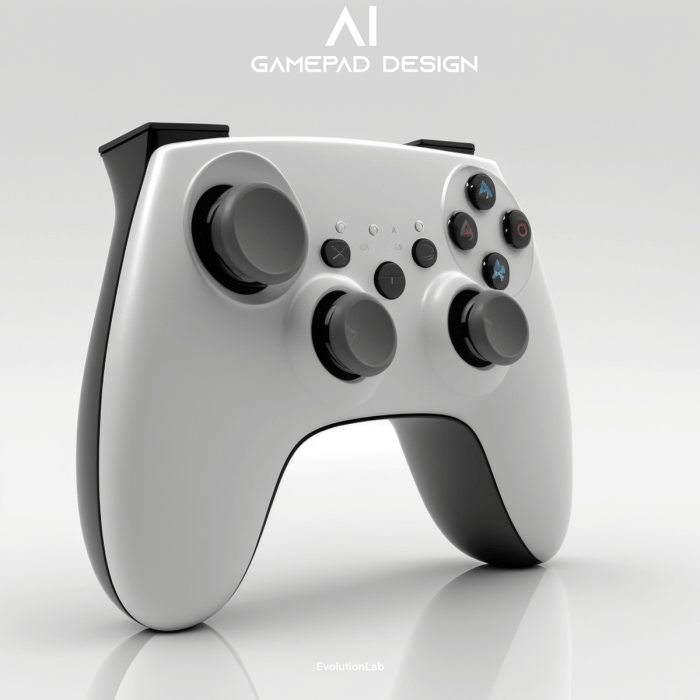
This innovative gamepad prioritizes comfort during prolonged gaming sessions. Its design incorporates several key features to minimize hand fatigue and maximize control. The form factor is asymmetrical, with a slightly curved, sculpted body made from a lightweight, yet durable, magnesium alloy. This material offers excellent strength-to-weight ratio and a cool-to-the-touch feel, mitigating the build-up of heat from extended use. The thumbsticks are positioned slightly further apart than traditional designs, reducing strain on the thumbs.
The face buttons (A, B, X, Y) are strategically placed to allow for effortless thumb presses, with a slightly concave surface for improved tactile feedback. The triggers and bumpers are larger and more responsive, made from a soft-touch rubber for enhanced grip and reduced pressure points. Additionally, the gamepad features interchangeable grips, allowing players to customize the feel and size to suit their preferences.
The back of the gamepad incorporates two programmable paddles for advanced control and reduces the need to frequently reposition fingers. The overall weight is meticulously balanced to minimize strain on the wrists and forearms.
Comparative Ergonomics of Popular Gamepad Designs
The following table compares the ergonomics of three popular gamepad designs: Xbox, PlayStation, and Nintendo Switch. These designs represent different approaches to ergonomics, highlighting the trade-offs between comfort, control, and form factor.
| Manufacturer | Grip Style | Button Layout | Overall Comfort Rating (1-5, 5 being most comfortable) |
|---|---|---|---|
| Xbox | Mostly palm grip, adaptable to claw grip | Traditional ABXY layout, well-spaced buttons | 4 |
| PlayStation | Primarily palm grip | Traditional ABXY layout, slightly tighter button spacing than Xbox | 3.5 |
| Nintendo Switch | Highly variable depending on mode; Joy-Cons allow for many grip styles, including claw and palm | ABXY layout, smaller buttons due to compact size | 3 |
Impact of Grip Styles on Player Performance and Comfort
Grip style significantly impacts both player comfort and performance. The two most common styles are the palm grip and the claw grip.The palm grip involves resting the entire hand on the gamepad, providing a stable base but potentially leading to hand fatigue during extended play. A visual representation would show a hand completely encompassing the gamepad, fingers comfortably curved around the body.The claw grip, on the other hand, involves curling the fingers to reach buttons and sticks, offering greater dexterity and speed but potentially causing more strain on the fingers and wrists.
A visual representation would show a hand with fingers curled inward, the thumb resting on the thumbstick, and the index and middle fingers extended to reach the buttons. The difference in wrist and finger angles between the two grip styles would be clearly visible. Professional esports players often utilize claw grip techniques, demonstrating a trade-off between comfort and performance.
However, even among professionals, overuse of the claw grip can lead to repetitive strain injuries. The optimal grip style often depends on the game and individual preferences.
Haptic Feedback and Immersion
The world of gaming has always strived for greater immersion, transporting players beyond the screen and into the heart of the action. Haptic feedback, the technology that provides tactile sensations to the user, plays a crucial role in achieving this. From the simple rumble of early controllers to the sophisticated systems of today, haptic feedback has continuously evolved, enriching the gaming experience and enhancing player engagement.Haptic feedback technology has undergone a significant transformation.
Early gamepads relied on simple rumble motors, providing a basic vibration that indicated events like collisions or explosions. This was a rudimentary form of haptic feedback, yet it was revolutionary for its time, adding a new layer of sensory input to gameplay. However, this technology lacked the nuance and detail necessary to accurately represent a wider range of in-game events.
Evolution of Haptic Feedback Technology
The evolution from simple rumble to more sophisticated systems has been driven by advancements in actuator technology and processing power. Modern gamepads utilize a variety of haptic feedback techniques, including linear resonant actuators (LRAs), which offer more precise control over vibration intensity and frequency, allowing for a greater range of tactile sensations. Some high-end controllers even incorporate multiple actuators, providing distinct feedback to different parts of the controller.
Games like “Forza Horizon 5” and “Gran Turismo 7” effectively utilize advanced haptic feedback to simulate the feel of different road surfaces and vehicle impacts, adding a layer of realism that enhances the overall driving experience. The PlayStation 5’s DualSense controller, with its adaptive triggers and haptic feedback capabilities, provides a notable example of this advancement, offering a more immersive experience in games like “Astro’s Playroom” and “Returnal”.
Racing Gamepad Haptic Feedback System Design
A new haptic feedback system for a racing game gamepad could utilize an array of miniature LRAs strategically placed throughout the controller. These actuators would be programmed to respond to in-game data, such as vehicle speed, acceleration, and the type of road surface. For instance, driving on gravel would trigger a coarse, high-frequency vibration, while driving on smooth asphalt would result in a smoother, lower-frequency vibration.
Vehicle impacts would be simulated through short, sharp bursts of intense vibration. The system would also incorporate force feedback in the steering wheel, simulating the resistance of turning the wheel at high speeds or during a sharp turn. The technical specifications would include high-resolution sensors to accurately detect user input, powerful microprocessors to process data in real-time, and advanced algorithms to map in-game events to haptic sensations.
The implementation would require careful calibration to ensure that the haptic feedback accurately reflects the in-game environment without being overwhelming or distracting.
Effectiveness of Haptic Feedback Across Game Genres
The effectiveness of different haptic feedback technologies in enhancing player immersion varies greatly depending on the game genre.
- Racing Games: Advanced haptic feedback, particularly systems incorporating force feedback and multiple LRAs, significantly enhances immersion by simulating road surfaces, impacts, and vehicle behavior. The DualSense controller’s implementation in racing games demonstrates this effectiveness exceptionally well.
- Fighting Games: Haptic feedback can provide a sense of impact during punches, kicks, and blocks, adding to the visceral feel of combat. However, overly aggressive or frequent haptic feedback can be distracting, requiring careful calibration and game design considerations.
- RPGs: Haptic feedback can be used to provide subtle cues, such as a gentle vibration when discovering a hidden item or a stronger vibration when engaging in combat. The effectiveness here relies on the subtlety and precision of the feedback, avoiding overwhelming the player with constant vibrations.
Adaptive Gamepad Technology
The future of gaming is inclusive and personalized. Adaptive gamepad technology promises to revolutionize how we interact with games, tailoring the experience to individual needs and abilities. This technology leverages advancements in AI, sensor technology, and haptic feedback to create truly dynamic and responsive gaming controllers. Imagine a gamepad that learns your play style, automatically adjusting button layouts and sensitivity for optimal performance, or one that adapts to physical limitations, providing customized accessibility features.
This section delves into the exciting possibilities of adaptive gamepads, exploring their potential for both enhancing the gaming experience for all and creating more inclusive gaming environments.
AI-Powered Adaptive Gamepads
AI algorithms can analyze player performance in real-time, adjusting the gamepad’s sensitivity, button mapping, and even the haptic feedback intensity to optimize gameplay. For example, an AI could detect that a player struggles with precise aiming in a first-person shooter and subtly increase the sensitivity of the right analog stick. Similarly, it could identify a player’s preferred button layout for specific actions and automatically configure the gamepad accordingly.
Benefits include improved performance, reduced frustration, and a more personalized and enjoyable gaming experience. This technology can learn individual player preferences, creating a truly unique and tailored experience that evolves with the player’s skill level. Consider a racing game where the AI notices a player struggles with sharp turns; it might subtly reduce the sensitivity of the steering input, providing a smoother and more controlled experience.
Adaptive Gamepad Systems for Players with Disabilities
Creating accessible gaming experiences is crucial for inclusivity. Adaptive gamepad systems can offer a range of features to improve accessibility for players with various disabilities. These systems could incorporate features like customizable button layouts, alternative input methods (such as eye-tracking or voice control), and adjustable force feedback intensity. The adaptability allows for individual customization, ensuring that the gamepad caters specifically to the player’s needs and limitations.
| Feature | Target Disability | Description |
|---|---|---|
| Customizable Button Mapping | Limited dexterity, motor impairments | Allows players to reassign buttons to more easily accessible locations on the gamepad. |
| Alternative Input Methods (e.g., Eye Tracking, Voice Control) | Severe motor impairments, paralysis | Provides input options beyond traditional button presses, allowing for control via eye movements or voice commands. |
| Adjustable Force Feedback Intensity | Sensory sensitivities | Allows players to adjust the strength of vibrations and haptic feedback to a comfortable level. |
| Ergonomic Design and Adjustable Components | Physical limitations, arthritis | Offers customizable grip sizes, button spacing, and other physical adjustments to enhance comfort and ease of use. |
| Switch Input Adapters | Limited hand function | Allows for integration with external switches and other assistive devices. |
Examples of Existing Adaptive Gaming Technologies and Areas for Improvement
Several companies are already developing and marketing adaptive gaming controllers. Examples include specialized controllers designed for specific disabilities, such as those with adaptive buttons or alternative input mechanisms. However, many current solutions are often expensive, lack widespread compatibility across games, and may not be sufficiently customizable to meet the diverse needs of players with disabilities. Furthermore, AI-powered adaptive systems are still in their early stages of development, with limited integration into mainstream gaming hardware.
Areas for improvement include increased affordability, broader game compatibility, more sophisticated AI algorithms for personalized adaptation, and more user-friendly interface designs for configuring accessibility settings. Future developments could also focus on the seamless integration of various assistive technologies into a single, comprehensive adaptive gaming system.
Integration of Emerging Technologies
The gaming landscape is constantly evolving, and the future of gamepads lies in seamlessly integrating cutting-edge technologies to enhance immersion, control, and overall player experience. This section explores the potential of augmented reality, eye-tracking, and biofeedback in revolutionizing gamepad design and functionality.
Augmented Reality Integration in Gamepads
Augmented reality (AR) overlays digital information onto the real world, offering exciting possibilities for gamepad integration. Imagine a gamepad that projects holographic HUD elements directly into your field of view, displaying vital game information like health, ammo, or mini-maps without requiring you to look away from the screen. This could be achieved through a small, integrated projector within the gamepad, casting a subtle, personalized AR overlay tailored to the specific game being played.
Furthermore, AR could transform the gamepad itself, perhaps displaying interactive buttons or menus projected onto the surface, adapting dynamically based on the game’s context. For example, in a racing game, the gamepad might project a virtual steering wheel overlay, enhancing the tactile feedback and immersion. The user interface would be intuitive and context-sensitive, minimizing distractions and maximizing gameplay efficiency.
The challenge lies in developing a system that is both powerful enough to generate compelling AR visuals and lightweight enough to be integrated comfortably into a gamepad.
Eye-Tracking Technology in Gamepads
Incorporating eye-tracking technology into gamepads offers a new level of intuitive control and immersion. By monitoring the player’s gaze, the gamepad could register subtle cues and commands, enhancing existing control schemes or even introducing entirely new ones. For example, players could select menu options or target enemies simply by looking at them, freeing up their hands for more complex actions.
Eye-tracking could also personalize the in-game experience, dynamically adjusting camera angles or HUD layouts based on the player’s focus. However, limitations exist. The accuracy and reliability of eye-tracking technology in a dynamic gaming environment need further refinement. Factors like ambient lighting and individual differences in eye characteristics can affect performance. Moreover, the potential for eye strain or fatigue needs careful consideration in the design and implementation of such a system.
Successful implementation would require sophisticated algorithms to filter out unwanted eye movements and ensure smooth, responsive gameplay. A possible application would be in strategy games, allowing for quick selection of units or buildings with a glance.
Biofeedback Sensors for Adaptive Difficulty
Biofeedback sensors integrated into gamepads could measure physiological responses like heart rate and skin conductance, providing real-time data on the player’s stress levels. This data could then be used to dynamically adjust the game’s difficulty. For instance, if the sensor detects heightened stress, the game could temporarily reduce the challenge, allowing the player to regain composure. Conversely, if the player is consistently calm, the difficulty could be increased to maintain an optimal level of engagement.
This adaptive difficulty system would personalize the gaming experience, ensuring that it remains both challenging and enjoyable. Imagine a first-person shooter where the intensity of enemy encounters automatically adjusts based on your heart rate, creating a truly personalized and responsive experience. The ethical considerations surrounding data collection and privacy need careful consideration, alongside the need for robust and accurate sensors that are not unduly intrusive to the gaming experience.
This technology is still in its early stages, but its potential for creating more personalized and engaging games is significant.
The Impact of Online Game Development on Gamepad Design
The rise of online multiplayer gaming has fundamentally reshaped the gamepad landscape. No longer are controllers solely designed for single-player experiences; they now need to accommodate the demands of competitive online play, complex interactions with other players, and the need for precise, rapid input. This shift has spurred innovation, pushing designers to create more ergonomic, feature-rich, and adaptable controllers tailored to specific online game genres.The challenges in designing for online gaming are multifaceted.
Latency, a significant concern in competitive online play, necessitates controllers that provide immediate and accurate feedback. The diverse range of online game genres, from fast-paced shooters to intricate strategy games, demands adaptability in controller design. Furthermore, the growing popularity of mobile gaming and cross-platform play introduces new complexities, requiring controllers that seamlessly integrate with various devices and operating systems.
Opportunities abound, however, as developers explore new input methods, haptic feedback technologies, and customizable controller layouts to enhance the online gaming experience.
Ergonomic Considerations for Online Multiplayer Games
Online multiplayer games often involve extended play sessions, demanding controllers that minimize hand fatigue and maximize comfort. This has led to innovations such as improved grip designs, customizable thumbstick placement, and the incorporation of more responsive buttons. For example, the Xbox Elite Series 2 controller features adjustable thumbstick tension and paddle attachments, allowing players to customize their controller to suit their specific needs and play style.
This caters to the extended periods of gameplay common in online multiplayer environments. Furthermore, the increasing prevalence of mobile gaming has encouraged the development of smaller, more portable controllers, suitable for both mobile and PC play.
Haptic Feedback and Immersion in Online Games
Haptic feedback plays a crucial role in enhancing the immersive experience of online games. Advanced haptic systems can provide subtle yet crucial cues, allowing players to better perceive the in-game environment and their actions within it. In racing games, for instance, subtle vibrations can simulate the feeling of the car’s tires on different surfaces, providing crucial information about traction and road conditions.
In first-person shooters, haptic feedback can provide realistic recoil effects, improving accuracy and immersion. The DualSense controller for the PlayStation 5 exemplifies this trend, offering highly detailed and nuanced haptic feedback that enhances the player’s connection to the virtual world.
Specialized Gamepad Features for Online Game Genres
The diverse range of online game genres necessitates specialized gamepad features tailored to specific gameplay mechanics. The following table summarizes key features for selected genres:
| Game Genre | Key Gamepad Features | Examples |
|---|---|---|
| Online Car Racing | Force feedback steering wheel integration, precise analog stick control, paddle shifters, customizable button layouts for quick access to essential functions. | Fanatec CSL Elite Racing Wheel, Thrustmaster T300 RS GT |
| Bike Racing Games | Precise analog stick control for lean input, responsive buttons for acceleration and braking, potentially gyroscopic sensors for realistic bike handling. | Specialized controllers designed for specific bike racing titles often incorporate these features. |
| First-Person Shooters (FPS) | High-precision analog sticks, programmable buttons for quick access to weapons and abilities, advanced haptic feedback for recoil simulation and environmental awareness. | Many high-end controllers such as the Xbox Elite Series 2 offer programmable buttons and advanced haptic feedback. |
| Real-Time Strategy (RTS) Games | Multiple input methods (mouse and keyboard integration with gamepad), customizable button layouts for quick access to unit commands and resource management, potentially touch-sensitive surfaces for map navigation. | While less common, some RTS games offer partial controller support with custom button mappings for core commands. |
Gamepad Design Considerations for Specific Game Genres
Gamepad design isn’t a one-size-fits-all affair. Optimal control depends heavily on the specific demands of the game genre. Different genres require different input methods, feedback mechanisms, and overall ergonomic considerations to maximize player immersion and performance. Let’s explore how gamepad design caters to the unique needs of various gaming experiences.
Bike Game Optimized Gamepad Design
Designing a gamepad for bike games requires a focus on intuitive control and realistic feedback. The primary goal is to accurately translate the player’s intentions into the virtual bike’s movements, mimicking the real-world experience as closely as possible. This involves careful consideration of button placement, analog stick sensitivity, and force feedback implementation.A successful bike game gamepad might feature a central, weighted base for stability, mimicking the feel of a motorcycle’s frame.
The analog sticks could be positioned to mirror handlebar controls, with the left stick controlling lean and the right stick controlling throttle and braking. Additional buttons could be strategically placed for gear shifting, horn, and other essential functions. Crucially, the force feedback system would simulate road conditions, impacts, and the subtle nuances of bike handling, providing a more immersive and engaging experience.
Imagine feeling the rumble of the engine, the bumps in the road, and the resistance of the handlebars as you navigate tight turns. This level of haptic feedback is essential for creating a truly believable and enjoyable riding experience.
Design Brief: Online Car Racing Gamepad
This design brief Artikels the specifications for a gamepad optimized for online car racing games, prioritizing precision, responsiveness, and immersive feedback.
Button Placement and Function
- Directional Buttons (D-pad): Positioned traditionally, primarily for menu navigation and quick access to secondary functions.
- Accelerator/Brake Triggers: Large, responsive triggers with adjustable sensitivity for precise control, ideally placed for comfortable finger placement.
- Steering Wheel Buttons: Located on the back or side of the gamepad for quick access to functions like pit stops or tire changes, avoiding interference with core driving controls.
- Gear Shift Buttons: Strategically placed for intuitive sequential shifting, potentially paddle shifters on the back for advanced racers.
Analog Stick Sensitivity and Force Feedback
- Analog Sticks: High-precision analog sticks with adjustable sensitivity settings to accommodate varying player preferences and driving styles. A slight dead zone could be implemented to reduce unintended small movements.
- Force Feedback: A robust force feedback system that accurately simulates road conditions, tire grip, collisions, and other driving dynamics. The feedback should be subtle yet responsive, providing valuable information without being overwhelming.
Additional Considerations
- Ergonomic Design: Comfortable grip and button layout to minimize hand fatigue during extended gameplay sessions.
- Durability: Robust construction to withstand the demands of competitive online racing.
- Connectivity: Wireless connectivity with low latency for smooth and responsive gameplay.
Gambling Card Game versus Racing Game Gamepad Design Requirements
The design requirements for a gamepad intended for gambling card games differ significantly from those for racing games. Racing games demand precise, responsive analog controls and strong haptic feedback, whereas card games primarily require accurate button presses and potentially some form of tactile feedback for card selection or action confirmation.For a racing game, a focus on analog stick precision and force feedback is crucial for a realistic and immersive experience.
The gamepad needs to translate subtle steering adjustments and acceleration changes accurately, while the force feedback provides valuable information about the car’s behavior and the track conditions. Imagine a gamepad with highly sensitive analog sticks that respond precisely to every movement, and a force feedback system that simulates the feeling of drifting, braking, and colliding with other cars.In contrast, a gamepad for card games would emphasize accurate and comfortable button presses.
The focus is on quick and precise inputs rather than continuous analog control. While haptic feedback could be used to confirm card selections or indicate special actions, it wouldn’t need the same level of sophistication or intensity as a racing game gamepad. The buttons would need to be clearly differentiated and easily accessible, ensuring a smooth and intuitive gameplay experience.
Consider a simple, compact gamepad with clearly labeled buttons and possibly a tactile response mechanism to confirm each card choice.
The Role of Gamepads in Gambling
The rise of online gambling has created a demand for more engaging and immersive gaming experiences, and gamepads are increasingly playing a crucial role in delivering this. While traditional mouse and keyboard setups remain prevalent, the tactile feedback and intuitive control offered by gamepads are proving attractive to developers and players alike, particularly in games that require precise timing and dexterity.
This section explores the design, functionality, security considerations, and innovative potential of gamepads within the online gambling landscape.
Gamepad design for online gambling platforms focuses on providing a comfortable and intuitive experience while ensuring the security of transactions and player data. Ergonomics are paramount, as prolonged use is common. Buttons and controls are typically strategically placed to minimize fatigue and maximize ease of use during extended gameplay sessions. The integration of haptic feedback can enhance the sense of immersion, adding another layer to the overall experience.
Moreover, security features, such as fingerprint sensors or other biometric authentication methods, are increasingly incorporated into high-end models to protect player accounts and financial information.
Gamepad Design Features for Online Gambling
Gamepads designed for online gambling often incorporate features beyond those found in standard gaming controllers. For example, some may include specialized buttons for quick access to frequently used functions like betting options or chat features. Others may feature integrated screens displaying real-time game information, such as current bets, winnings, and account balances. The layout of buttons and sticks often reflects the specific requirements of the games they are designed for, such as card games or slot machine simulations.
High-quality materials and robust construction are also common, ensuring durability and longevity.
Potential for Gamepad Innovation in Online Gambling
The potential for innovation in gamepads for online gambling is significant. Imagine gamepads with advanced haptic feedback systems that simulate the feel of shuffling cards or the weight of chips. The incorporation of eye-tracking technology could further enhance immersion and personalize the gambling experience. Integration with virtual reality (VR) or augmented reality (AR) headsets could create truly immersive and engaging gambling environments.
Furthermore, advanced security features, such as tamper-resistant hardware and encrypted communication protocols, could significantly enhance the security of online gambling platforms. For instance, a gamepad could incorporate a secure element (SE) chip, similar to those found in credit cards, to protect sensitive data.
Regulatory Considerations for Gamepads in Online Gambling
The use of gamepads in online gambling is subject to various regulatory considerations, varying significantly by jurisdiction. Regulations concerning data protection, responsible gambling measures, and the prevention of underage gambling all impact gamepad design and functionality. Compliance with these regulations is crucial for online gambling operators to maintain legal operation. For example, gamepads might need to incorporate features that facilitate responsible gambling practices, such as time limits or loss limits, ensuring adherence to local and international regulations.
Furthermore, manufacturers and operators must ensure that the gamepads and associated software comply with data privacy laws and regulations, such as GDPR (General Data Protection Regulation) in Europe and CCPA (California Consumer Privacy Act) in California. This includes securing player data and ensuring transparent data handling practices.
The Future of Gamepad Innovation
The next five years promise a dramatic reshaping of the gamepad landscape, driven by advancements in haptic technology, AI integration, and the immersive potential of VR and the metaverse. We’re moving beyond simple button presses and analog sticks towards devices that offer unparalleled levels of feedback and interaction, blurring the lines between the digital and physical worlds.
Predicted Gamepad Trends in the Next Five Years
The gaming industry’s relentless pursuit of immersion and enhanced player experience will fuel several key trends. We can expect to see a significant increase in the sophistication of haptic feedback, moving beyond simple vibrations to more nuanced and realistic sensations. AI will play a crucial role, personalizing gameplay experiences and adapting the gamepad’s functionality to individual player preferences.
Furthermore, miniaturization and improved battery technology will lead to smaller, lighter, and more powerful gamepads. Finally, the rise of cloud gaming will impact gamepad design, leading to a greater emphasis on wireless connectivity and cross-platform compatibility.
Impact of Virtual Reality (VR) and Metaverse Technologies on Gamepad Design
VR and metaverse technologies will fundamentally alter how we interact with games, demanding innovative gamepad designs. Traditional gamepads may become less central, replaced by more intuitive and immersive input methods such as hand-tracking, full-body motion capture suits, and brain-computer interfaces. However, refined haptic feedback and adaptive controls within VR/metaverse gamepads will remain crucial for enhancing the sense of presence and realism.
Imagine a VR sword fight where the gamepad provides realistic weight and resistance, or a metaverse construction game where the gamepad’s tactile feedback mirrors the textures and properties of virtual materials. The integration of advanced sensors will allow gamepads to track the user’s position and orientation in 3D space, providing a more natural and responsive gaming experience. The metaverse, with its focus on social interaction, will also drive the development of gamepads that facilitate seamless communication and collaboration between players.
Conceptual Gamepad Design for a Future Gaming Platform
The “Synapse” gamepad is designed for a future cloud-based gaming platform. It features a sleek, ergonomic design with customizable modular components. The core unit is a lightweight, palm-sized device with advanced haptic feedback motors that provide detailed tactile sensations, mimicking textures, impacts, and even temperature changes within the game world. Two interchangeable modules snap onto the sides: one module houses directional thumbsticks with adjustable tension and sensitivity, and the other incorporates a set of customizable buttons and triggers with pressure-sensitive technology for precise control.
A small OLED screen displays real-time game information and allows for on-the-fly customization of controls. The Synapse gamepad utilizes advanced haptic technology, offering realistic tactile feedback that responds dynamically to in-game actions. The modular design enables players to personalize their gamepad for specific games or genres. Advanced sensors allow for precise motion tracking and gesture recognition, enhancing immersion in VR and AR experiences.
The gamepad’s connectivity is seamless and adaptive, supporting a variety of gaming platforms and peripherals. Its rechargeable battery provides extended playtime. The Synapse’s materials are sustainably sourced and recyclable, reflecting a commitment to environmental responsibility.
Final Wrap-Up
The future of gaming is undeniably intertwined with the future of the gamepad. As technology continues to advance at a breakneck pace, we can expect even more innovative designs that push the boundaries of immersion and accessibility. From AI-powered adaptive controls to the seamless integration of AR and VR, the possibilities are truly limitless. The journey we’ve taken through gamepad innovations reveals not only the remarkable progress already made, but also the incredible potential that lies ahead.
Get ready for a gaming experience unlike any other!
FAQ Corner
What materials are best for gamepad construction to enhance durability and comfort?
High-quality plastics, durable rubber grips, and even metal accents are used to create robust yet comfortable gamepads. The choice depends on the desired feel and price point.
How do different analog stick designs affect gameplay precision?
Concave sticks offer better precision for subtle movements, while convex sticks provide better control for larger movements. The optimal design depends on personal preference and game genre.
What are the ethical considerations surrounding the use of biofeedback in gamepads?
Privacy concerns around collecting player physiological data are paramount. Transparency and user consent are crucial for responsible implementation.
How can gamepads be designed to be more inclusive for players with limited mobility?
Customizable button layouts, alternative input methods (e.g., eye tracking, voice control), and adjustable sensitivity settings are key to improving inclusivity.


