
Ever wondered what makes a puzzle game truly addictive? It’s not just about the pretty graphics; it’s the clever mechanics that hook players and keep them coming back for more. From the satisfying
-click* of a tile falling into place to the “aha!” moment of solving a complex riddle, puzzle game mechanics are the heart of the experience.
This exploration delves into the design, progression, monetization, and even the surprising connections between puzzle games and other genres, revealing the secrets behind creating captivating and rewarding puzzle experiences.
We’ll dissect core mechanics, explore different difficulty curves, and examine various monetization strategies for free-to-play titles. We’ll also look at how puzzle mechanics can be incorporated into other game genres, exploring both the opportunities and the potential pitfalls – like incorporating gambling elements responsibly. Get ready to unlock the secrets of compelling puzzle game design!
Core Puzzle Mechanics
Designing engaging puzzle game mechanics requires a careful balance of challenge, satisfaction, and intuitive interaction. The right mechanic can elevate a game from frustrating to fulfilling, while a poorly designed one can quickly lead to player abandonment. Let’s explore three distinct mechanics, examining their gameplay, UI considerations, and successful examples.
Three Distinct Puzzle Game Mechanics
We’ll delve into three diverse puzzle mechanics: tile-matching, spatial reasoning, and logic-based puzzles. Each offers a unique player experience and presents different design challenges.
| Mechanic | Complexity | Target Audience | Replayability |
|---|---|---|---|
| Tile-Matching | Low to Medium | Casual gamers, all ages | High (varied levels, power-ups) |
| Spatial Reasoning (Block Placement) | Medium to High | Puzzle enthusiasts, strategy gamers | Medium (limited level variations, but high strategic depth) |
| Logic-Based (Deduction) | Medium to High | Strategy gamers, puzzle enthusiasts | High (complex puzzles, multiple solutions) |
Tile-Matching Mechanic Gameplay and UI
Tile-matching games involve manipulating tiles to create matches, usually by swapping adjacent tiles. The core gameplay loop consists of identifying matches, making swaps, and achieving objectives (e.g., clearing the board, reaching a score target). UI design should prioritize clear tile visuals, intuitive controls (touch or mouse), and visual feedback for successful matches and penalties. Examples include Candy Crush Saga and Bejeweled, which leverage bright colors, satisfying animations, and progressively challenging levels to maintain player engagement.
Their effectiveness stems from the simple yet rewarding core mechanic, coupled with well-implemented progression systems.
Spatial Reasoning (Block Placement) Mechanic Gameplay and UI
Spatial reasoning puzzles require players to strategically place blocks or shapes within a confined area, often with specific constraints. The gameplay loop involves analyzing the available space, planning placements, and executing moves to achieve a goal (e.g., filling the area completely, creating a specific pattern). UI should focus on clear visual representation of the play area, intuitive controls for block manipulation (rotation, placement), and potentially visual aids (hints, previews).
Tetris is a prime example, its enduring popularity stemming from the simple yet challenging core mechanic and the immediate feedback loop of block placement and line clearing. The clear, uncluttered UI enhances the focus on spatial reasoning.
Logic-Based (Deduction) Mechanic Gameplay and UI
Logic-based puzzles demand players to deduce solutions through logical reasoning and inference. The gameplay loop involves analyzing clues, formulating hypotheses, and testing deductions to reach a solution. UI should prioritize clear presentation of clues, a user-friendly interface for inputting deductions (e.g., grids, checkboxes), and visual feedback indicating correct or incorrect deductions. Sudoku and Picross are excellent examples, showcasing how clear visual representations of clues and the player’s progress are crucial for a positive user experience.
The inherent satisfaction of solving a complex puzzle through pure logic fuels replayability.
Puzzle Progression and Difficulty
Crafting a compelling puzzle game hinges on a carefully designed progression system. Players need a gradual increase in challenge to stay engaged, but too steep a climb leads to frustration and abandonment. The key is to find the sweet spot – providing enough of a challenge to be rewarding, but not so much that it becomes insurmountable. This section delves into strategies for creating a satisfying and engaging puzzle progression.
A well-structured puzzle game smoothly transitions players from easily solvable puzzles to more complex ones. This requires a meticulous approach to difficulty scaling, incorporating elements that gradually increase the challenge while ensuring the game remains enjoyable. We’ll examine several methods for achieving this delicate balance.
Sample Puzzle Progression System
The following example demonstrates a possible progression system for a tile-matching puzzle game. Each level introduces new mechanics or increases the complexity of existing ones, ensuring that the player constantly learns and adapts. This incremental approach prevents sudden difficulty spikes, keeping players engaged and motivated.
- Level 1-5: Basic mechanics introduced. Simple board configurations, limited number of tiles, and straightforward match requirements. Focus is on familiarizing the player with core gameplay.
- Level 6-10: Increased board size and number of tiles. Introduction of time limits, encouraging faster thinking and strategic planning. The complexity of matching patterns increases slightly.
- Level 11-15: New tile types introduced with special abilities or effects. More complex board layouts with obstacles or limited movement options. Time limits become more stringent.
- Level 16-20: Combination of previously introduced mechanics and increased difficulty. Introduction of bonus objectives, adding layers of strategy to gameplay. Players must optimize their moves to achieve higher scores.
Balancing Challenge and Frustration
The art of puzzle design lies in the delicate balance between challenge and frustration. Players should feel a sense of accomplishment after solving a puzzle, but not experience undue stress or annoyance. This balance is achieved through careful consideration of hints, feedback, and difficulty scaling.
- Strategic Hint System: Instead of directly revealing the solution, hints should offer subtle guidance, such as highlighting a potential starting point or suggesting a useful strategy. For example, a hint might indicate a specific area of the puzzle that warrants closer examination, rather than outright stating the solution.
- Meaningful Feedback: Provide clear and immediate feedback on player actions. If a move is incorrect, indicate why it’s incorrect without explicitly showing the correct move. This allows players to learn from their mistakes without feeling penalized.
- Multiple Solution Paths: Where possible, allow for multiple solutions to a single puzzle. This caters to different player styles and prevents players from getting stuck on a single approach.
Difficulty Curve Designs
The difficulty curve dictates how the challenge increases throughout the game. Different curves cater to different player preferences and game designs. Here are three common types:
- Linear Difficulty Curve: The difficulty increases steadily and consistently across levels. This is a predictable and straightforward approach, suitable for games targeting a broad audience. Example: Each level adds one more piece to a jigsaw puzzle.
- Exponential Difficulty Curve: The difficulty increases rapidly, with significant jumps between levels. This is suitable for games that want to quickly challenge experienced players, offering a steeper learning curve. Example: In a tower defense game, the number of enemies might double with each level.
- Variable Difficulty Curve: The difficulty fluctuates, with easier levels interspersed with harder ones. This approach helps to maintain player engagement by preventing monotony and offering periods of respite. Example: A platformer game might have a challenging level followed by a simpler level to allow the player to catch their breath and consolidate their skills before another challenging section.
Puzzle Game Genres and Subgenres
The world of puzzle games is vast and varied, encompassing a wide range of mechanics, aesthetics, and player experiences. Understanding the different genres and subgenres is crucial for both players seeking their next challenge and developers aiming to craft engaging and successful titles. This section will explore five key genres, highlighting their core mechanics and typical player bases.
Let’s delve into the diverse landscape of puzzle game genres. We’ll examine their unique characteristics and consider how these differences impact both the design process and the player experience.
Puzzle Game Genre Comparison
The following table compares five distinct puzzle game genres, highlighting their core mechanics and typical player demographics. Note that these are broad categories, and many games blend elements from multiple genres.
| Genre | Core Mechanics | Target Audience | Examples |
|---|---|---|---|
| Match-Three | Matching adjacent tiles of the same type to remove them from the board, often with cascading effects and special power-ups. | Casual gamers, players seeking quick and satisfying gameplay loops. Often appeals to a broad age range. | Candy Crush Saga, Bejeweled |
| Logic Puzzles | Solving problems using deductive reasoning, pattern recognition, and strategic thinking. Often involves constraints and rules. | Players who enjoy mental challenges and strategic thinking. Appeals to a wide age range, often with variations in difficulty. | Sudoku, KenKen, Portal series (puzzle elements) |
| Jigsaw Puzzles | Fitting together irregularly shaped pieces to form a complete image. | Players who enjoy patience, visual problem-solving, and a sense of accomplishment. Appeals to a broad age range, particularly older players. | Physical jigsaw puzzles, digital jigsaw puzzle apps |
| Physics Puzzles | Manipulating objects within a physics-based environment to achieve a goal. Often involves elements of gravity, momentum, and collisions. | Players who enjoy experimentation and problem-solving within a dynamic environment. Appeals to a broader range, but often skews towards those who enjoy simulation elements. | Angry Birds, Cut the Rope |
| Word Puzzles | Using letters or words to solve puzzles, often involving anagrams, crosswords, or word searches. | Players who enjoy wordplay, vocabulary challenges, and linguistic puzzles. Appeals to a broad age range, with difficulty adjusted accordingly. | Scrabble, Wordle, Boggle |
Narrative Versus Mechanics-Focused Puzzle Games
Puzzle game design philosophies diverge significantly depending on the emphasis placed on narrative versus pure mechanics. Games focused solely on mechanics prioritize elegant and challenging gameplay loops, often abstracting away any narrative context. In contrast, narrative-driven puzzle games weave compelling stories into the gameplay, using puzzles as a means to advance the plot or reveal character details. This creates a richer and more immersive experience but can require a more complex design process to seamlessly integrate both narrative and gameplay elements.
For example, a purely mechanics-focused puzzle game might present a series of increasingly complex spatial reasoning challenges, while a narrative-driven game might use those same spatial reasoning challenges to represent a character’s journey through a metaphorical labyrinth, with clues and story elements interwoven into the puzzle design itself.
Design Challenges of Social and Competitive Elements
Integrating social or competitive elements into puzzle games presents unique design challenges. Balancing the core puzzle mechanics with social interaction or competitive ranking requires careful consideration. Overly competitive elements can alienate casual players, while poorly implemented social features might fail to engage players or even detract from the core gameplay experience.
Successful examples often leverage leaderboards, asynchronous multiplayer modes, or cooperative puzzle-solving to enhance the social or competitive aspects without compromising the integrity of the core puzzle experience. Maintaining a balance between individual skill and luck is also crucial in competitive puzzle games, ensuring fairness and preventing frustration.
Monetization Strategies for Puzzle Games
Designing a successful monetization strategy for a free-to-play puzzle game requires a delicate balance. The goal is to generate revenue without alienating players or creating a pay-to-win environment that undermines the core gameplay experience. Several approaches exist, each with its own advantages and drawbacks.
Three Distinct Monetization Strategies for Free-to-Play Puzzle Games
This section Artikels three common monetization strategies, weighing their pros and cons to help developers make informed decisions. The choice depends heavily on the target audience, game design, and overall marketing strategy.
- Interstitial Ads: This involves showing short video or banner ads between game levels or at specific points within gameplay. Advantages: Relatively simple to implement, requires minimal development effort, and can generate substantial revenue with a large player base. Disadvantages: Can be disruptive to the player experience, leading to negative reviews and player churn if overused. A poorly implemented ad system can severely impact player retention.
Many players utilize ad blockers, reducing potential revenue.
- In-App Purchases (IAPs): This offers players the option to purchase virtual goods, such as power-ups, hints, or cosmetic items. Advantages: Can generate significant revenue, especially with well-designed and desirable items. Allows for a more controlled and less disruptive monetization experience compared to ads. Disadvantages: Requires careful design to avoid a pay-to-win scenario. Players may feel pressured to spend money to progress, negatively impacting player satisfaction.
Pricing strategies need to be carefully considered to balance revenue and player perception of value.
- Subscription Model: This offers players access to premium content or features for a recurring fee. Advantages: Provides a predictable and stable revenue stream. Can offer a sense of exclusivity and reward loyal players. Disadvantages: May deter players who are unwilling to commit to a subscription. Requires compelling premium content to justify the cost.
Player churn can be a significant factor, as players may cancel subscriptions if they feel the value isn’t worth the price.
Designing a System for Incorporating In-App Purchases (IAPs) Without Compromising Gameplay
Successful IAP implementation hinges on offering value to players without making purchases necessary for progress. A well-designed system provides optional boosts or enhancements, rather than essential gameplay elements.
“The key is to create a system where players feel empowered by their purchases, not obligated.”
For example, a puzzle game might offer IAPs for extra lives, hint tokens, or cosmetic customizations (e.g., different themes or character skins). These purchases should enhance the experience, not fundamentally change the challenge. The core gameplay loop should remain accessible and enjoyable for all players, regardless of their spending habits. Careful balancing of difficulty and the effectiveness of IAP items is crucial to prevent a pay-to-win situation.
Regularly analyzing player feedback and purchase data allows for adjustments and improvements to the IAP system.
Visual Representation of User Flow for a Freemium Puzzle Game
Imagine a flowchart. The starting point is the “Game Download/Launch” box. From there, an arrow leads to the “Tutorial/First Level” box. After the tutorial, the user proceeds to the “Gameplay Loop” box. This box includes several branching paths: “Successful Level Completion” leads to the “Next Level” box; “Level Failure” leads to a choice between “Using a Hint (IAP)” or “Trying Again.” The “Gameplay Loop” also branches to a “Daily Reward” box, where players can collect free in-game currency or items.
Another branch from the “Gameplay Loop” leads to an “In-App Purchase Menu” box, offering various IAPs, such as extra lives, hint packs, or cosmetic items. All paths ultimately loop back to the “Gameplay Loop,” creating a continuous cycle. The “Daily Reward” and “In-App Purchase Menu” boxes offer opportunities for monetization without disrupting the core gameplay experience.
Puzzle Game Mechanics in Relation to Other Game Genres
Puzzle game mechanics, while seemingly self-contained, often share surprising similarities and offer exciting cross-pollination opportunities with other game genres. Exploring these connections reveals innovative design possibilities and a deeper understanding of core gameplay principles. This section will delve into the interplay between puzzle mechanics and genres like online games, bike games, racing games, and gambling games, highlighting both their shared elements and unique differences.
Puzzle Game Mechanics in Online Games versus Bike Games
Online games frequently utilize puzzle elements for progression, character customization, or event completion. Consider the intricate crafting systems in many MMORPGs, where combining materials in specific sequences mirrors puzzle-solving. Bike games, conversely, might incorporate puzzle elements into level design, requiring players to navigate complex obstacle courses or solve environmental puzzles to advance. While online games often feature more abstract puzzle mechanics, bike games tend to integrate puzzles more directly into the core gameplay loop, demanding spatial reasoning and precise timing.
The key difference lies in the integration: in online games, puzzles are often optional or supplementary, while in bike games, they’re often integral to the core challenge.
Puzzle Mechanics in Online Car Racing Games and Gambling Card Games
Online car racing games sometimes incorporate puzzle elements into challenges, like requiring players to solve a mini-puzzle to unlock a shortcut or gain a speed boost. Gambling card games, on the other hand, inherently involve strategic decision-making that can be viewed as a form of puzzle-solving. The similarities lie in the strategic element: both require players to anticipate outcomes and make choices based on incomplete information.
However, the differences are significant. Car racing puzzles are typically action-oriented and time-sensitive, while card game puzzles are more deliberate and reliant on probability and risk assessment. The focus in racing games is on skill and reaction time, whereas in card games, it’s on strategic planning and calculated risk-taking.
Incorporating Puzzle Game Elements into Online Driving Games
The potential for integrating puzzle elements into online driving games is considerable. Imagine a racing game where players must solve spatial reasoning puzzles to navigate challenging tracks or unlock power-ups. Puzzles could also be incorporated into vehicle customization, requiring players to strategically assemble parts or solve logic problems to optimize performance. Further, environmental puzzles, requiring players to manipulate the game world to create advantageous racing lines, could add depth and strategic complexity.
This approach could offer a more engaging and less repetitive gameplay experience than traditional racing games.
Potential Puzzle Mechanics in Online Gambling Games
It’s crucial to design puzzle mechanics for online gambling games responsibly, avoiding any features that could encourage problem gambling. The following examples focus on skill-based puzzles that enhance gameplay without relying on chance to determine outcomes.
- Matching Tile Puzzle: Players match tiles to unlock bonus features or rewards, similar to a solitaire game, but with progressively challenging layouts. This rewards strategic thinking and planning, not pure luck.
- Logic-Based Number Puzzle: Players solve mathematical puzzles to increase their potential winnings. Correct answers could multiply rewards, while incorrect answers might result in minor penalties, but never lead to significant loss of funds.
- Word Search Puzzle: Players uncover hidden words within a grid to earn in-game currency or unlock special offers. The difficulty can be adjusted to offer different levels of reward.
- Jigsaw Puzzle with Hidden Rewards: Completing a jigsaw puzzle reveals a hidden bonus or multiplier, adding an extra layer of engagement and reward.
- Code-Breaking Puzzle: Players solve a cipher or code to access bonus rounds or special prizes. This mechanic rewards logical reasoning and problem-solving skills.
Legal Implications of Incorporating Gambling Mechanics into Puzzle Games
Incorporating gambling mechanics, such as virtual chips or currency with real-world value, into puzzle games necessitates careful consideration of gambling laws. Gambling commissions in different jurisdictions have varying regulations regarding what constitutes gambling and the permissible forms of in-game monetization. For instance, the UK Gambling Commission has strict guidelines regarding loot boxes and other potentially addictive features. Games involving elements of chance that offer monetary rewards may require licensing and adherence to specific regulations regarding responsible gaming practices, age verification, and anti-money laundering measures.
Developers must meticulously research and comply with the gambling laws of each territory where they intend to distribute their game to avoid legal repercussions.
Puzzle Game Themed Around Gambling Cities
A puzzle game themed around gambling cities like Las Vegas or Macau could incorporate historical and cultural elements into the gameplay. Puzzles could be based on architectural landmarks, historical events, or local customs. For example, a puzzle might involve recreating a famous casino facade from fragmented images or solving a riddle based on a historical figure associated with the city.
This approach offers a unique opportunity to blend entertainment with education, immersing players in the rich history and culture of the chosen location.
Ethical Concerns Surrounding Gambling-Related Puzzle Games
Ethical concerns arise when designing gambling-related puzzle games. It’s crucial to avoid designs that could inadvertently promote problem gambling or exploit vulnerable individuals. Clear guidelines and responsible gaming features, such as spending limits, time limits, and self-exclusion options, are essential to mitigate these risks. Transparency regarding odds and payout rates is also crucial to ensure fair play and prevent deceptive practices.
The ethical responsibility lies in creating engaging gameplay that doesn’t prey on players’ vulnerabilities or lead to harmful gambling behaviors.
Outcome Summary
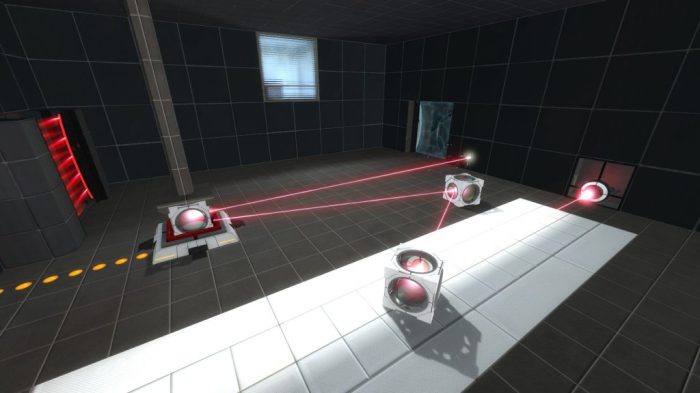
Designing a successful puzzle game is a delicate balance of challenge, reward, and player engagement. By carefully crafting core mechanics, implementing a well-paced progression system, and choosing the right monetization strategy (if applicable), developers can create truly memorable experiences. Understanding the nuances of puzzle design, and its potential crossover with other genres, opens up a world of creative possibilities.
So, grab your thinking caps and prepare to design the next puzzle game sensation!
FAQ Compilation
What are some common pitfalls to avoid when designing puzzle game difficulty?
Avoid sudden, drastic difficulty spikes. Gradually increase complexity. Also, ensure sufficient hints and feedback are available without giving away solutions. Overly frustrating puzzles can lead to player abandonment.
How can I ensure my free-to-play puzzle game isn’t pay-to-win?
Focus in-app purchases (IAPs) on cosmetic items, convenience features (like extra lives or hints), or expansions of content, rather than giving paying players a significant gameplay advantage.
What are some ethical considerations when integrating gambling mechanics into puzzle games?
Prioritize responsible gambling features, such as clear spending limits, time limits, and readily available resources for problem gambling support. Consult with legal experts to ensure compliance with relevant gambling regulations in all target jurisdictions.
What are some examples of innovative puzzle mechanics?
Consider incorporating physics-based puzzles, augmented reality elements, or asynchronous multiplayer challenges. Experiment with unique control schemes and unconventional game boards to create fresh and engaging experiences.


