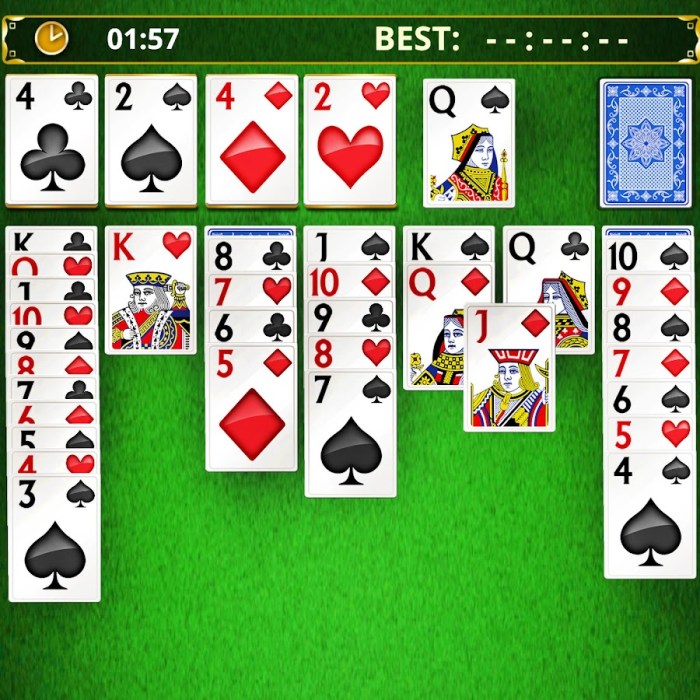
Ever wondered how free-to-play card games rake in millions while offering seemingly endless entertainment at zero upfront cost? It’s a captivating blend of engaging gameplay, clever monetization, and shrewd player psychology. This deep dive explores the fascinating world of free-to-play card games, uncovering the secrets behind their success and the challenges they face in a fiercely competitive market.
From analyzing the giants like Hearthstone and Pokémon TCG Online to dissecting their innovative mechanics and monetization tactics, we’ll uncover the winning formula (and maybe even a few hidden pitfalls!).
We’ll journey through the intricacies of game design, examining how developers balance fun with profit, and how they keep players hooked for hours, days, and even years. We’ll also touch upon the ethical considerations of monetization, the impact of gambling regulations, and the ever-evolving landscape of online gaming technology. Get ready to shuffle up and deal in – it’s time to explore the world of free-to-play card games!
Player Engagement and Retention Strategies
Keeping players hooked in the competitive world of free-to-play card games requires a multifaceted approach. It’s not just about creating a fun game; it’s about fostering a thriving community and rewarding players in ways that encourage continued participation. This involves carefully designed reward systems, a compelling progression path, and a strong sense of community.
Successful free-to-play card games understand that player retention isn’t a one-size-fits-all solution. It’s an ongoing process of analyzing player behavior, iterating on game mechanics, and constantly adapting to the evolving needs and preferences of the player base. This requires a deep understanding of player psychology and a commitment to providing a consistently rewarding and engaging experience.
Effective Reward Systems and Progression Mechanics
Reward systems are crucial for maintaining player engagement. A well-structured system provides players with a sense of accomplishment and encourages them to continue playing. This can involve daily rewards, milestone achievements, and tiered rewards based on player progress. Examples include daily login bonuses offering in-game currency or card packs, rewarding players for completing specific quests or challenges with powerful cards or cosmetic items, and offering increasingly valuable rewards as players climb through the game’s ranking system.
Furthermore, a clear and rewarding progression system, where players feel a tangible sense of advancement and improvement, is essential. This could be manifested through unlocking new cards, upgrading existing ones, or progressing through increasingly difficult levels or challenges. The key is to provide a balanced system that caters to both casual and hardcore players, ensuring that there’s always something to strive for, regardless of skill level or time commitment.
The Role of Community Building in Player Retention
A strong and active community is a powerful tool for player retention. Players are more likely to stick around if they feel connected to other players and the developers. This can be achieved through various means, including in-game chat features, social media integration, regular community events, and active developer communication. For example, hosting regular tournaments with attractive prizes can create a sense of competition and camaraderie, while forums or Discord servers allow players to interact with each other and share their experiences.
Direct developer engagement, through regular updates, community feedback sessions, and transparent communication about game development, fosters trust and strengthens the player-developer relationship. This creates a feeling of belonging and shared experience that significantly impacts player loyalty.
Best Practices for Maintaining a Healthy and Active Player Base
Maintaining a healthy and active player base requires a proactive and ongoing effort. It’s not enough to simply launch a game and hope for the best; consistent effort is needed to ensure player engagement and satisfaction.
- Regular Content Updates: Introduce new cards, game modes, and features regularly to keep the gameplay fresh and exciting.
- Balanced Gameplay: Ensure the game is fair and balanced, preventing any single strategy or card from dominating.
- Responsive Customer Support: Address player concerns and feedback promptly and efficiently.
- Active Community Management: Foster a positive and welcoming community through active moderation and engagement.
- Data-Driven Decisions: Use player data to identify areas for improvement and make informed decisions about game development.
- Rewarding Progression: Implement a clear and rewarding progression system that keeps players motivated.
- Fair Monetization: Avoid predatory monetization practices that alienate players. Offer optional purchases that enhance the experience but don’t impact gameplay balance.
The Impact of Online Game Development on Free-to-Play Card Games
The rise of free-to-play (F2P) card games is inextricably linked to advancements in online game development. These advancements have not only made the creation of complex, engaging card games possible but have also revolutionized their distribution and monetization strategies, transforming the landscape of the gaming industry. The accessibility and global reach offered by modern technology have fueled the explosive growth of this genre.The influence of online game development on the F2P card game market is multifaceted.
Improved graphics engines allow for stunning visuals and animations, enhancing player immersion. Sophisticated networking technologies enable seamless multiplayer experiences, fostering competition and community building. Furthermore, the ability to easily update and patch games allows developers to continuously add content, keeping players engaged and returning for more.
The Role of Cloud Computing and Mobile Platforms
Cloud computing has become a cornerstone of F2P card game development. It provides the scalable infrastructure necessary to handle millions of concurrent players, ensuring stable server performance even during peak times. Games like Hearthstone and Gwent rely heavily on cloud infrastructure to manage player data, matchmaking, and in-game events. This scalability is crucial for F2P games, which often boast a large and fluctuating player base.
Mobile platforms, particularly iOS and Android, have also played a pivotal role. Their widespread adoption has democratized access to F2P card games, making them available to a significantly larger audience than traditional PC-based games. The portability of mobile devices has also contributed to increased playtime and player retention.
Challenges and Opportunities of Cross-Platform Development
Cross-platform development, while offering the opportunity to reach a wider audience, presents significant challenges. Ensuring consistent gameplay experience across different platforms (PC, mobile, consoles) requires careful planning and meticulous testing. Different screen sizes, input methods, and hardware capabilities demand a flexible and adaptable game engine. However, the potential rewards are substantial. A successful cross-platform F2P card game can tap into a massive player base, maximizing revenue potential and building a vibrant community that transcends individual platforms.
Examples of successful cross-platform games include Pokémon TCG Online, demonstrating the benefits of reaching a broader player base.
Development Processes: Card Games vs. Other Online Game Genres
The development process for F2P card games shares some similarities with other online game genres, such as the need for robust networking and regular updates. However, there are key differences. Card games often prioritize strategic depth and balanced gameplay, requiring extensive playtesting and iterative balancing adjustments. The design of collectible cards, their rarity, and the associated monetization strategies demand meticulous planning and careful consideration of player psychology.
In contrast, genres like MMORPGs might focus more heavily on world-building, character progression, and complex narratives. The emphasis on strategic gameplay and collectible elements distinguishes the development process of F2P card games. For example, the development of a F2P card game requires more intense focus on balancing the game’s economy and ensuring fair gameplay compared to, say, a casual mobile puzzle game.
Related Game Genres and Their Influence
Free-to-play card games, while seemingly distinct, share surprising similarities and contrasting differences with other popular game genres. Understanding these relationships reveals valuable insights into design choices, player expectations, and overall success strategies. The following sections explore these connections, focusing on the influence of car racing and bike games, as well as the impact of gambling card games on free-to-play design.
Free-to-Play Card Games Compared to Online Car Racing Games
While seemingly disparate, free-to-play card games and online car racing games share common ground in their monetization and progression systems. Both often utilize a “grind” mechanic, requiring players to invest significant time to unlock new content or improve existing assets. In car racing games, this might involve upgrading cars or unlocking new tracks; in card games, it translates to collecting rarer cards and building stronger decks.
Both genres also leverage in-app purchases to accelerate this progression, allowing players to bypass the grind for a fee. However, the core gameplay loop differs significantly. Car racing games emphasize skill and reflexes in real-time competition, while card games focus on strategic planning and deck-building. The social aspect also varies; car racing often features competitive multiplayer, while card games may include both competitive and cooperative modes, or focus more on solo play.
Free-to-Play Card Games Compared to Bike Games
The similarities between free-to-play card games and bike games are less pronounced than with car racing games. Bike games, whether racing or stunt-based, tend to prioritize immediate action and player skill, often relying on precise controls and fast-paced gameplay. Free-to-play card games, in contrast, emphasize long-term strategic planning and deck management. Monetization strategies might overlap, with both genres employing in-app purchases for cosmetic items or performance boosts (faster bikes vs.
stronger cards), but the core gameplay experiences remain distinct. The social element might be present in both, but it’s generally more competitive in bike racing games focused on leaderboards and time trials.
Elements of Gambling Card Games Influencing Free-to-Play Card Game Design
The allure of chance and reward inherent in gambling card games has subtly influenced the design of their free-to-play counterparts. The concept of “opening packs” to acquire random cards mirrors the excitement of opening a hand in poker or blackjack. The rarity system in many free-to-play card games, with increasingly powerful cards being less common, echoes the rarity and value of certain cards in traditional gambling games.
However, it’s crucial to note that free-to-play games must avoid the addictive and potentially harmful aspects of gambling. This is achieved by ensuring that skill and strategy play a significant role in success, rather than relying solely on chance. For example, while obtaining rare cards offers an advantage, strategic deck building and skillful gameplay are crucial for winning matches.
Impact of Gambling Card Game Design on Free-to-Play Card Game Design
The design of gambling card games has impacted free-to-play card games primarily in terms of reward systems and player psychology. The anticipation and excitement associated with winning or acquiring valuable items in gambling games have been successfully replicated in free-to-play models. This is achieved through reward systems that provide a sense of progression and accomplishment, even if the rewards are primarily cosmetic or provide only a slight advantage in gameplay.
However, ethical considerations are paramount. Free-to-play games must avoid creating an environment that encourages excessive spending or exploits addictive tendencies, a common criticism leveled against some gambling games. Responsible game design involves balancing the rewarding aspects of acquiring rare items with a focus on fair gameplay and skillful progression.
Monetization and the Business Model
The success of any free-to-play (F2P) card game hinges on a carefully crafted monetization strategy. It’s a delicate balance: generating revenue without alienating players or creating a pay-to-win environment. This section explores various monetization models, a sample strategy, their comparative effectiveness, and the ethical considerations involved.
Monetization Models in Free-to-Play Card Games
Free-to-play card games employ a variety of monetization methods, often in combination. Understanding these models is crucial for designing a successful business strategy.
- In-App Purchases (IAPs): This is the cornerstone of most F2P card game monetization. IAPs offer players the ability to purchase virtual currency, card packs containing random cards, or specific powerful cards directly. Examples include buying booster packs in Hearthstone or purchasing individual cards in Magic: The Gathering Arena.
- Cosmetic Items: Players can purchase purely aesthetic items such as alternative card art, animated card backs, or unique player avatars. These items don’t impact gameplay, offering players a way to personalize their experience without affecting balance.
- Battle Passes: Battle passes offer tiered rewards for completing in-game challenges. A free track provides some rewards, while a paid track unlocks premium rewards, including exclusive cards, cosmetics, or in-game currency. This model incentivizes consistent engagement and offers players value for their money.
- Subscription Models: Some games offer monthly or annual subscriptions that provide access to exclusive content, such as additional card packs, bonus rewards, or early access to new expansions. This model provides a predictable revenue stream and rewards loyal players.
A Comprehensive Monetization Strategy for a Hypothetical F2P Card Game
Let’s consider “Elemental Empires,” a hypothetical collectible card game with distinct factions based on elemental powers. Our strategy would combine several monetization models:
- Card Packs: Players can purchase packs containing a random selection of cards, driving the core loop of collection and deck-building. Different pack types would offer varying rarities, with legendary cards being exceptionally rare and desirable.
- Battle Pass: A seasonal battle pass would offer both free and paid tracks, providing rewards like cosmetic items (unique card backs featuring elemental designs), in-game currency, and exclusive cards balanced to avoid disrupting gameplay.
- Cosmetic Items: Players could purchase alternative art for cards, animated avatars representing their chosen elemental faction, and unique borders for their profile. This caters to players seeking personalization without impacting gameplay fairness.
- In-Game Currency: Players could purchase in-game currency to directly purchase individual cards or packs, offering a faster path to building desired decks. However, the cost would be balanced to avoid making this the only viable route to competitive play.
Comparison of Monetization Strategies Effectiveness
The effectiveness of different monetization strategies varies depending on the game’s design, target audience, and market competition. Generally, a diversified approach is more effective than relying solely on one method. For instance, while IAPs can generate significant revenue, relying solely on them can alienate players. A battle pass system, on the other hand, encourages consistent engagement, while cosmetic items provide additional revenue streams without impacting gameplay balance.
The key is finding a balance that maximizes revenue while maintaining player satisfaction.
Ethical Considerations of Monetization in Free-to-Play Games
Ethical monetization is paramount. Avoiding pay-to-win mechanics is crucial. All purchasable items should enhance the player experience without giving a significant competitive advantage over free-to-play players. Transparency in pricing and drop rates for random card packs is also essential. Players should feel they are receiving fair value for their money.
Exploitative practices, such as extremely low drop rates for desirable cards or manipulative pricing, can severely damage a game’s reputation and player base. Successful F2P games prioritize player enjoyment and fair play, understanding that long-term player retention is more valuable than short-term revenue gains. Games like Hearthstone, for example, have faced criticism for their monetization practices in the past, highlighting the importance of ethical considerations in this space.
The Role of Gambling and its Regulation
Free-to-play card games, while offering entertainment at no upfront cost, often incorporate mechanics that blur the lines between skill and chance. The inclusion of loot boxes, in-app purchases for virtual currency, and other similar features raises concerns about the potential for gambling addiction and the need for robust regulatory frameworks. This section explores the complexities of this issue, examining the mitigation strategies employed by developers and the role of governing bodies in ensuring responsible gaming practices.The potential for gambling addiction in free-to-play card games stems from the psychological mechanisms that drive engagement.
The unpredictable nature of loot boxes, for example, can trigger dopamine releases similar to those experienced in traditional gambling, fostering a cycle of repetitive spending in the pursuit of rare or desirable virtual items. Developers attempt to mitigate this risk through various strategies, including implementing spending limits, providing clear information about the odds of obtaining specific items, and promoting responsible gaming messages within the game itself.
However, the effectiveness of these measures varies widely, and ongoing debate surrounds their efficacy.
Gambling Addiction Mitigation Strategies in Free-to-Play Card Games
Developers utilize a range of methods to address the potential for gambling addiction. These strategies include, but are not limited to, implementing daily or weekly spending limits, providing players with tools to self-exclude from the game, offering clear and transparent information regarding the odds of obtaining in-game items through random mechanisms, and integrating responsible gaming resources and educational materials directly within the game interface.
Many games also incorporate “cool-down” periods after significant spending to encourage players to reflect on their purchasing habits. For instance, a game might temporarily restrict access to purchasing options after a player has spent a substantial amount of money in a short time frame.
Regulations Surrounding Gambling in Online Games
The regulatory landscape surrounding gambling in online games is fragmented and varies significantly across jurisdictions. Some countries have comprehensive legislation specifically addressing loot boxes and other potentially addictive in-game mechanics, while others lack clear regulatory frameworks altogether. This inconsistency creates challenges for both developers, who must navigate a complex patchwork of laws, and players, who may be exposed to varying levels of protection depending on their location.
Often, regulations focus on the probability disclosures for loot boxes and other similar features. They may mandate that developers clearly state the odds of obtaining specific items, preventing misleading or deceptive practices. Furthermore, advertising restrictions may be in place to limit the targeting of vulnerable populations.
The Role of Gambling Commissions in Regulating Online Games
Gambling commissions, or equivalent regulatory bodies, play a crucial role in overseeing online games with elements of chance. Their responsibilities typically include licensing and monitoring game operators, enforcing compliance with gambling regulations, investigating complaints, and educating players about responsible gaming practices. They often set minimum standards for responsible gambling features within games, such as self-exclusion options and spending limits.
In addition to this, they often have the power to impose penalties on developers who fail to comply with regulations, ranging from fines to license revocation. The specific powers and responsibilities of gambling commissions vary widely depending on the jurisdiction.
Hypothetical Scenario: A Gambling Commission Investigation
Imagine a popular free-to-play card game, “Mystic Masters,” is under investigation by the fictional “National Gaming Authority” (NGA). Players have reported concerns about the game’s “Mystic Chests,” which contain random in-game items. The NGA suspects that the odds of obtaining rare items are not clearly disclosed, and that the game’s design may be manipulative, encouraging excessive spending. The NGA’s investigation would involve reviewing the game’s code to verify the stated odds, analyzing player spending data to identify potential patterns of addictive behavior, and interviewing developers to assess their compliance with responsible gaming guidelines.
If the NGA finds evidence of misleading practices or a failure to implement adequate responsible gaming measures, they could issue a warning, impose fines, or even mandate changes to the game’s mechanics. This hypothetical scenario illustrates the pivotal role gambling commissions play in safeguarding players and maintaining the integrity of the online gaming market.
Geographical Considerations and Market Trends
The global landscape of free-to-play card games is incredibly diverse, shaped by cultural preferences, economic factors, and the ever-shifting tides of regulatory landscapes. Understanding these geographical nuances is crucial for developers aiming for international success. Market penetration varies wildly, with some regions exhibiting explosive growth while others remain relatively untapped.
This section will explore the major markets for free-to-play card games, highlighting key cultural differences in player preferences and the significant impact of gambling regulations on market access and growth. We will also present a conceptual map illustrating the global distribution of players, emphasizing the areas of highest concentration.
Major Markets for Free-to-Play Card Games
The largest markets for free-to-play card games are concentrated in Asia, North America, and Europe. Within Asia, China, Japan, and South Korea represent significant hubs, fueled by a large mobile gaming population and a strong preference for collectible card games (CCGs). North America, particularly the United States and Canada, exhibits robust engagement, driven by a mature market for digital gaming and a strong acceptance of freemium models.
Europe shows a fragmented market, with significant player bases in Germany, the United Kingdom, and France, but also substantial variations across individual countries due to cultural differences and regulatory environments.
Cultural and Regional Differences in Player Preferences
Cultural nuances significantly influence player preferences. For example, East Asian markets often favor games with intricate mechanics, complex strategic depth, and a strong emphasis on social interaction and competitive ranking. Western markets, conversely, may show a preference for games with simpler mechanics, quicker gameplay, and a greater focus on individual progression and customization. These preferences impact game design, marketing strategies, and the overall monetization approach.
Consider the popularity of highly competitive games like Hearthstone in the West versus the enduring appeal of gacha-style games in Japan, where the element of chance and collection is deeply embedded in gaming culture.
Impact of Gambling Regulations on the Free-to-Play Card Game Market
Gambling regulations vary significantly across jurisdictions, profoundly impacting the free-to-play card game market. Stricter regulations, particularly those limiting loot boxes or in-app purchases perceived as gambling, can severely restrict market access and revenue generation. Conversely, regions with more lenient regulations might experience higher levels of player spending and overall market growth. For example, the differing regulations surrounding loot boxes in countries like Belgium and the Netherlands versus those in the United States have resulted in varied approaches to monetization and marketing for game developers.
This necessitates a tailored approach to game design and monetization strategies depending on the target market’s regulatory environment.
Global Distribution of Free-to-Play Card Game Players
Imagine a world map. The highest concentrations of free-to-play card game players are represented by vibrant, intensely colored regions. East Asia, particularly China, Japan, and South Korea, would glow with a brilliant, almost incandescent light, indicating exceptionally high player density. North America, particularly the eastern seaboard and California, would also be brightly illuminated, though with a slightly less intense hue.
Europe would show a more patchy distribution, with brighter spots in the United Kingdom, Germany, and France, and dimmer areas in less densely populated regions. South America and parts of Africa would show a less intense light, indicating a smaller but still significant player base. Oceania, particularly Australia and New Zealand, would also show a moderate level of brightness.
The intensity of the color would directly correlate to the number of active players, creating a visually striking representation of the global distribution of free-to-play card game enthusiasts. This dynamic map would continuously evolve, reflecting the changing trends and growth patterns in the global gaming market.
End of Discussion
So, are free-to-play card games a winning strategy? The answer, as with most things in life, is nuanced. While the potential for massive profits is undeniable, success hinges on a delicate balance of compelling gameplay, ethical monetization, and a deep understanding of the player base. From innovative mechanics to community building, developers constantly strive to create engaging experiences that keep players coming back for more.
The future of free-to-play card games is bright, brimming with exciting possibilities and constant evolution – a testament to the enduring appeal of a well-crafted deck and a thrilling match.
FAQ Corner
What are the most common in-app purchases in free-to-play card games?
Common in-app purchases include card packs containing random cards, individual cards, in-game currency to buy packs or individual cards, and cosmetic items like card backs or avatars.
How do free-to-play card games prevent gambling addiction?
Many games implement measures like limiting daily spending, offering “cool-down” periods, and providing resources to help players manage their spending habits. However, responsible gaming practices are still crucial for players.
Are all free-to-play card games created equal?
Absolutely not! Game mechanics, art styles, card designs, and monetization models vary widely, leading to vastly different gameplay experiences. Some prioritize skill, while others emphasize luck or collection.
Can I play free-to-play card games offline?
Most free-to-play card games require an internet connection for online multiplayer and to access features like daily rewards. However, some might offer a limited offline mode for single-player practice or campaign scenarios.


